
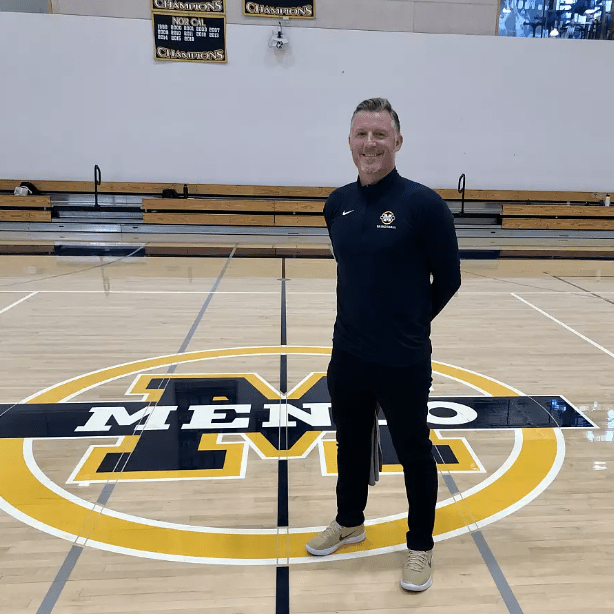
Ben Batory, an Amherst College classmate of mine who played professional basketball in Costa Rica, Northern Ireland, the Republic of Ireland, Malta, Switzerland, and Mauritius, has taken an unconventional path to Wall Street. Today, Ben is SVP and Head of Trading at Franklin Equity Group, but in this conversation, he talks mostly about his role as Boys Basketball Program Director and Varsity Head Coach at Menlo School in Atherton, California. As you’ll hear, Ben has made himself a student and practitioner of what I’ll call the pursuit of the better.
In this episode, you’ll learn:
Why the world needs more athletes
His approach to building a resilient, healthy, and winning culture in sports and work
How Ben connects with teenage athletes, developing durable character and life skills in the process
The Amherst classmates (and one professor!) he wants me to interview next
Resources Ben mentions:
A manual for life he wrote for his daughters
The creed he wrote that was inspired by the Holstee Manifesto
A presentation he delivered for a master’s program that leans on Chinese art for your evolution to servant leadership
The syllabus he presented to his basketball team and their parents before the start of this season
You can email Ben at benbatory@gmail.com.

Lee Macon has worked in advertising through arguably its greatest transformations. He began at the dawn of the consumer internet, navigated the shift to social media, and now is helping clients figure out AI. As the Chief Strategy Officer at the Community, a global creative agency, Lee oversees strategic efforts for major clients like Verizon, Netflix, and Porsche. When he’s not helping his clients grow, Lee is a dedicated father, navigating the challenges of parenting across different generations.
In this interview, you’ll learn about:
Why our graduating year of 1994 represents a line of demarcation in the advertising world, separating the world of pre- and post-digital.
The importance of understanding diverse audiences.
The evolution of advertising strategies over the years.
Balancing short-term and long-term marketing goals.
Whom in the Class of 1994 he wants me to interview next.
You can email Lee at lee@leemaicon.com.

Jim Confalone’s journey from fine arts to founding a successful B2B marketing firm is marked by tragedy and a timely eye for opportunity.
Jim, the founder of B2B marketing agency Modicum, shares the evolution of his career, from his initial passion for painting to servicing blue chip clients like Google and Qualcomm. Modicum specializes in creating powerful visual designs that help businesses make distinctive and lasting impressions on their customers, especially at big product launch events. His big breakthrough came when he solved a key problem most business people encounter at some point: Microsoft’s PowerPoint is an awful canvas for visual design.
In this episode, you’ll learn:
Jim’s career evolution from a fine arts background to founding a successful B2B marketing firm – and the entrepreneurial qualities both careers require.
His marketing philosophy, which emphasizes the importance of substance and truth in marketing, avoiding unnecessary bells and whistles.
The therapeutic role art has played in his life, through painting and other creative activities that have helped him navigate tragedy.
The Amherst classmate he wants me to interview next
Note: This episode touches on suicide.
To get in touch with Jim, email him at jconfalone@gmail.com, and visit his agency’s website: http://www.modicum.agency.

Vicky Levy’s story is so compelling that one episode of this podcast can’t contain it all.
In Part 1 of her extraordinary story, she touches on her journey into life sciences and her current role as Global Life Sciences and Healthcare Industry Leader at Deloitte. But her reason for staying in life sciences and healthcare is even more profound than her reasons for pursuing the industry in the first place. You see, Vicky is a cancer survivor. As luck would have it, her diagnosis occurred at just about the same time that a miraculous category of drugs emerged to treat her rare condition.
In this episode, you will learn:
How Vicky – a history major at Amherst College – learned to advocate for herself with her doctors and their cutting edge medical research
Her keys to navigating a life-altering medical diagnosis
The extraordinary generosity her Amherst friends and sister-in-law demonstrated as Vicky and her husband contemplated starting a family
In Part 2, we will talk more about her work and perspective on the global healthcare industry. We also will talk about her Amherst College experience, the role that liberal arts plays in her work today, and the Amherst classmates she’d like me to interview next.
If you or someone you know is interested in learning about pharmacological clinical trials, visit https://clinicaltrials.gov/to get started.
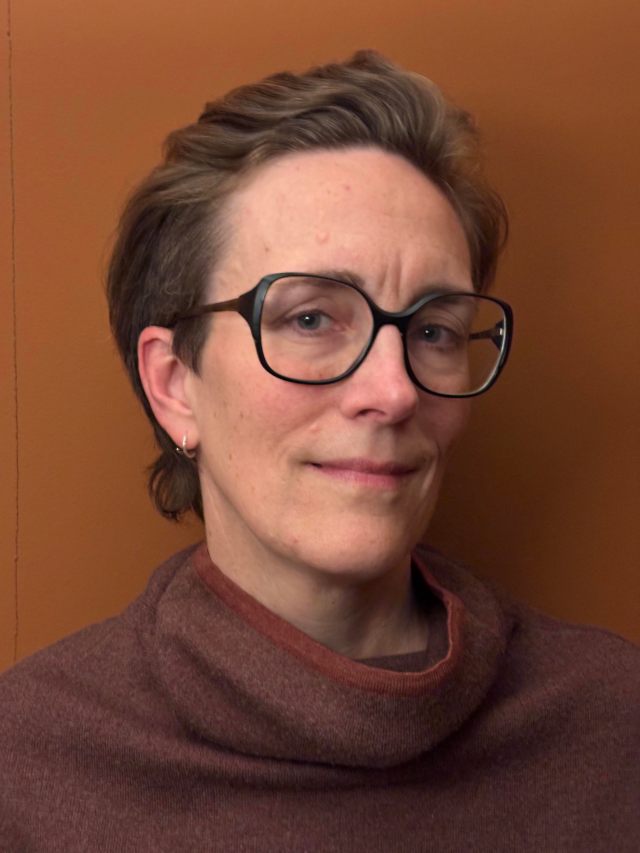
The Amherst Class of 1994 diaspora has expanded all over the world, including to Norway. That’s where we find Inger-Lise Schwab representing the Purple and White.
In this episode, she shares thoughts on how to combat sunlight deprivation, the distinctions between the elite colleges and universities in the United States and the more egalitarian Norwegian system of higher education, and lots and lots of Amherst College memories, many of them dripping with mischief. Oh, and she’s the only classmate I’ve interviewed (so far) to have an IMDB credit (look it up).
In this episode, you’ll learn:
The creative ways Inger-Lise and her family bring light and lightness into their world, especially when they may only get a few hours of sun a day in the wintertime
The role that the Amherst College dining halls played in creating social cohesion
The naked bike rides through campus, swimming in the nearby reservoir, “after hours” visits to the observatory, and other fond memories she has of campus life
The Amherst classmates she wants me to interview next
You can find her on Facebook. Big thanks to Susan Antebi for recommending Inger-Lise for the pod!
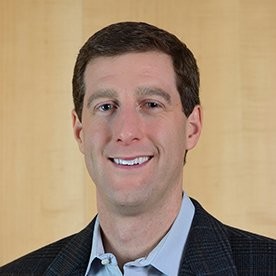
I’ve been thinking a lot lately about how I want to spend the next 20 years of my life. How should I dedicate my time, which is more precious to me than it ever has been?
My Amherst College classmate Josh Hamermesh has asked and answered this big question for himself, and the results he has achieved have me feeling more optimistic about my own future.
After graduating from Amherst in 1994, Josh played professional basketball in Israel, went to work in consulting, and earned his MBA from Harvard. That eventually led him to the world of biotech and pharma, where he rose through the ranks and held some big jobs. But rather than experiencing any major exits or critical value creation, his experience included many “small company” challenges: downsizings, bankruptcies, and strategic changes in directions. These often caused him to change jobs every 3-4 years.
Having grown fatigued with that pattern – and having nearly suffered a terrible loss in his family – Josh pivoted to teaching business for Milton High School (Massachusetts). To my ear, he has never sounded happier or more fulfilled, and he has helped me refine my own thinking and planning for my next 20 years.
It’s also obvious just how much Josh loves Amherst College, and how much his experience there continues to shape his life.
In this episode, you’ll learn:
The near-tragedy that befell Josh’s family – and the productive introspection it provoked
Why preparing for class each day is similar to stand-up comedy
The instructors and coaches who have informed Josh’s approach to teaching
Why beating Williams in basketball was one of the happiest, most memorable events in his life
Whom from the Amherst Class of 1994 Josh wants me to interview next
To reach Josh, email him at jhamermesh@gmail.com or find him on LinkedIn.
***Correction*** Our classmate Adam Bonin surfaced to let Josh and me know that covered Josh and the rest of the men’s basketball team in the ’92-93 season, not ’93-94, as Josh had remembered.

As you prepare to ring in the New Year, you might be asking, in 2025, how can I achieve a better alignment with my family, career, and especially myself?
This episode just might help you answer that question. Join me as I chat with my Amherst College classmate Fernanda Bressan (nee Soicher), a business coach who is an expert in helping clients get unstuck in any aspect of their lives.
In this episode, you’ll learn:
Why it’s so hard to achieve work-life balance – and what’s better to pursue instead
Her unique approach to coaching executives at blue chip clients such as Google, Accenture, and Hermes
The key insight she gleaned about herself during her four years at Amherst College that propels her work even today
The one characteristic that entrepreneurs like Fernanda can’t do without
The Amherst classmates she wants me to interview next
Follow Fernanda and her firm, Foundfully, via their website (www.foundfully.com) or on Instagram, connect with her on LinkedIn, or email her at fernanda@foundfully.com.

Put down your phone. Pick up a real book, and give yourself time to think deeply.
That’s the message of this episode’s guest, my Amherst College classmate Hector Garcia. Don’t mistake his perspective for a desperate clinging to a fading past, though. This guy loves to teach young minds at Loyola University Chicago, and he never stops innovating through course design. Along the way, he reminds his students – and us – that there’s a great big world to explore. We can’t engage it meaningfully if we subject ourselves to always-on digital stimuli.
In this episode, you’ll learn:
The patterns Hector sees in the last 60 years of social unrest, including protest at Amherst College in the early 1990s
How he innovates through course design and instruction
The balance he strikes in the classroom and beyond between the timeless and the contemporary
His unlikely journey from Chicago to Amherst
The Amherst classmates Hector would like to hear from next
So take a break from non-stop election coverage, pop in a cassette, or better yet, catch up with Hector in this episode. He’ll make you feel better about the world.
To get in touch with Hector or learn more about his work:
Email: hgarci1@luc.edu
Taller de Jose, an organization that delivers companionship and personal attention to people who have difficulty finding their way in a complex social services system
Follow Makelit on X
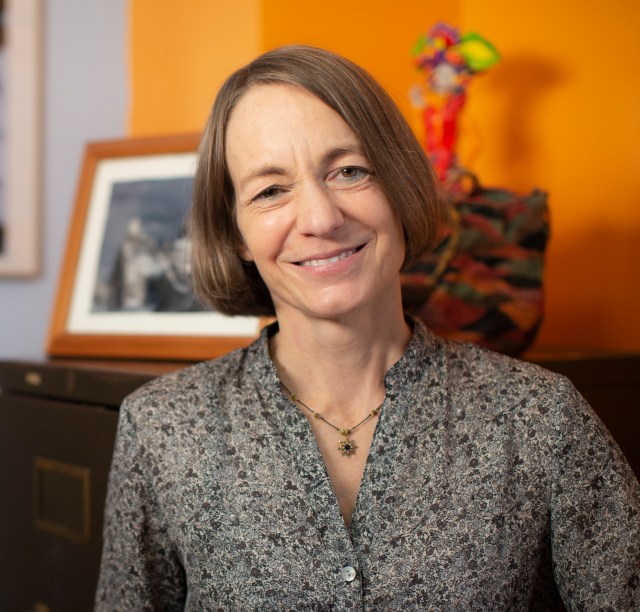
Susan Antebi has built a career based on both the depth and breadth of her fascinating interests. In recording this episode, she taught me so much about things I had never considered.
Susan is Professor of Latin American literature at the University of Toronto. Much of her award-winning writing and research focuses on ways the disabled or abnormal are depicted in Mexican culture. She traces some of these depictions to the eugenics movement of the late 19th and early 20th centuries. I know a bit about eugenics and its awful place in US and German history, but I didn’t know anything about its presence in Mexico.
In this episode, you’ll learn:
The origin of Susan’s passion for cultures and languages
The ways in which the eugenics movement shows up today in Mexican culture
How some reality TV programming can be seen as the modern day manifestation of the carnival freak show
Why she’s researching depictions of the paranormal
The Amherst classmates she’d like me to interview next
To get in touch with Susan, email her at susan.antebi@utoronto.ca or contact her on Facebook.
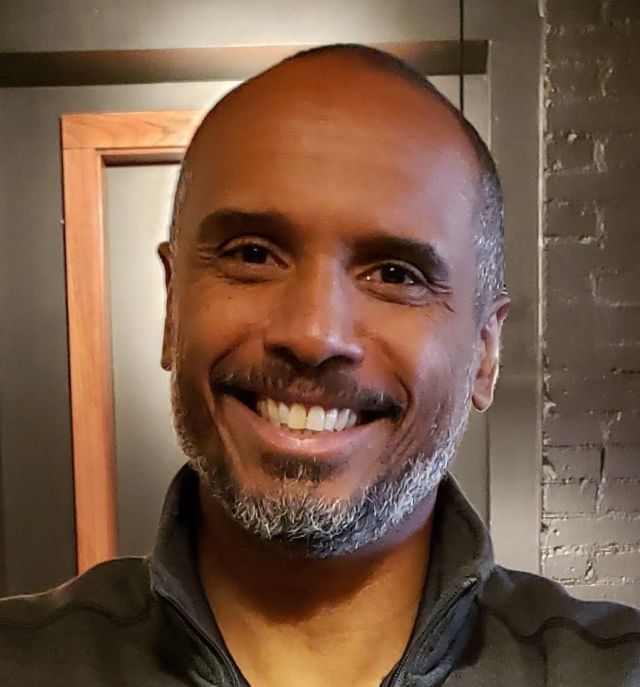
Raised by a single dad in the Bronx, Anibal Martinez developed an eagerness to see the world at an early age. Anibal studied abroad not once but twice during his four years at Amherst College. He served in the Peace Corps in Papua New Guinea. Before enrolling in law school, he worked as a flight […]
 Matt Collins' Blog