
Monthly Archives: January 2026
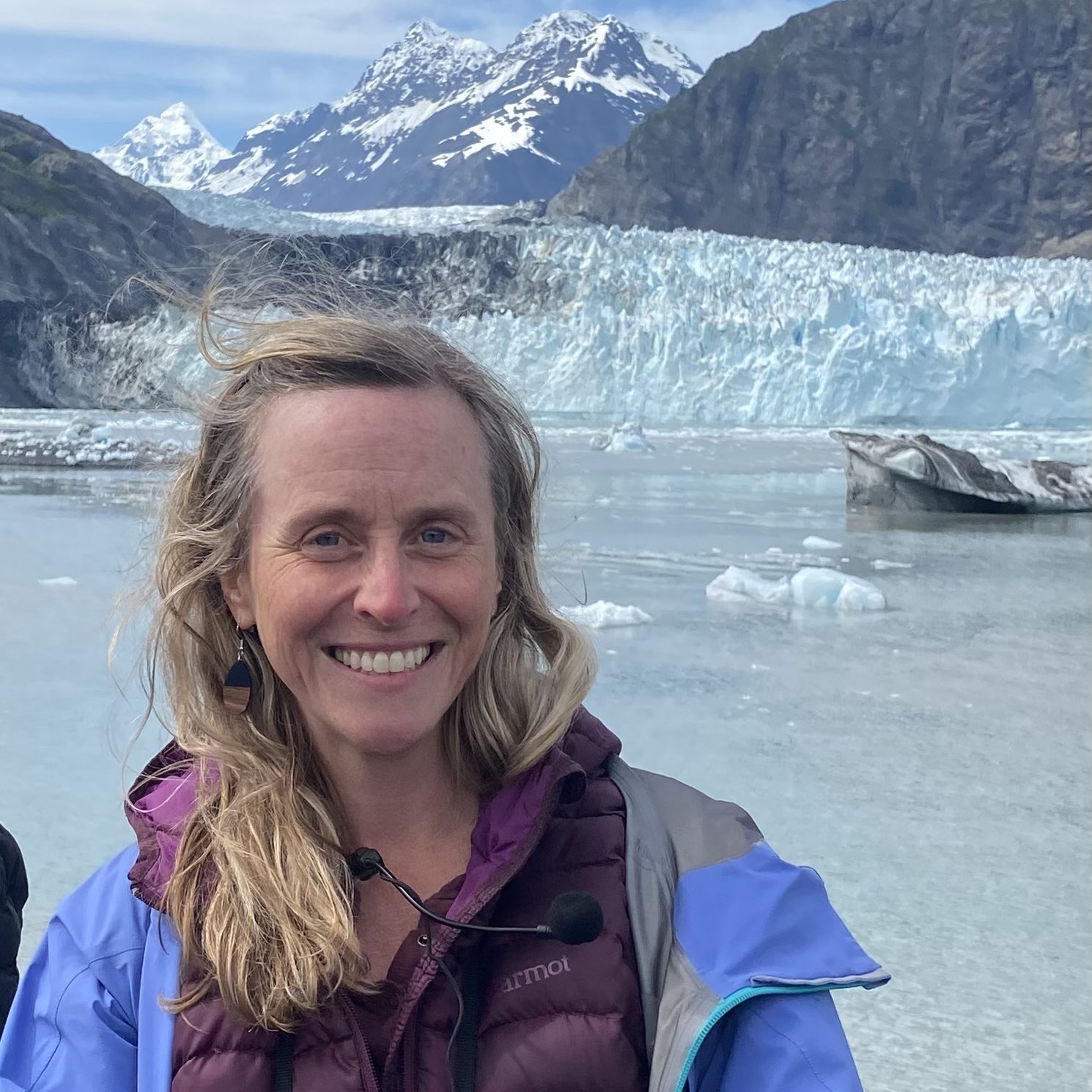
Sonia Nagorski Reads Earth’s Past To Help Predict And Improve Its Future
As a very amateur geologist, I’ve been looking forward to catching up with Sonia Nagorski ever since my podcast project started. That’s because she’s a geologist whose work focuses on understanding Earth’s history and what it can tell us about the world we humans are shaping today. Perhaps not surprisingly, she and I share a sense of wonder about the mind-bending qualities of Earth time and the pleasures of connecting to the geology right under our feet.
We talk about her two decades living and teaching in Alaska, the sense of community that comes from life at the edge of wilderness, and her recent move to the University of Colorado Boulder. Along the way, Sonia explains how geology provides essential context for understanding topics that go beyond geology, and why learning to notice and name the landscape around us can deepen both curiosity and responsibility.
Highlights:
Why geology is best understood as history told on Earth’s timescale
What living in Alaska taught her about community, resilience, and connection to place
Simple ways to build curiosity about the geology all around us
The three Amherst classmates she wants me to interview next
You can email her at sonianagorski@gmail.com.
Also, check out the Rockd app to learn about the geology in your neck of the woods.
Big thanks to Deb Thalheimer Long for nominating Sonia.
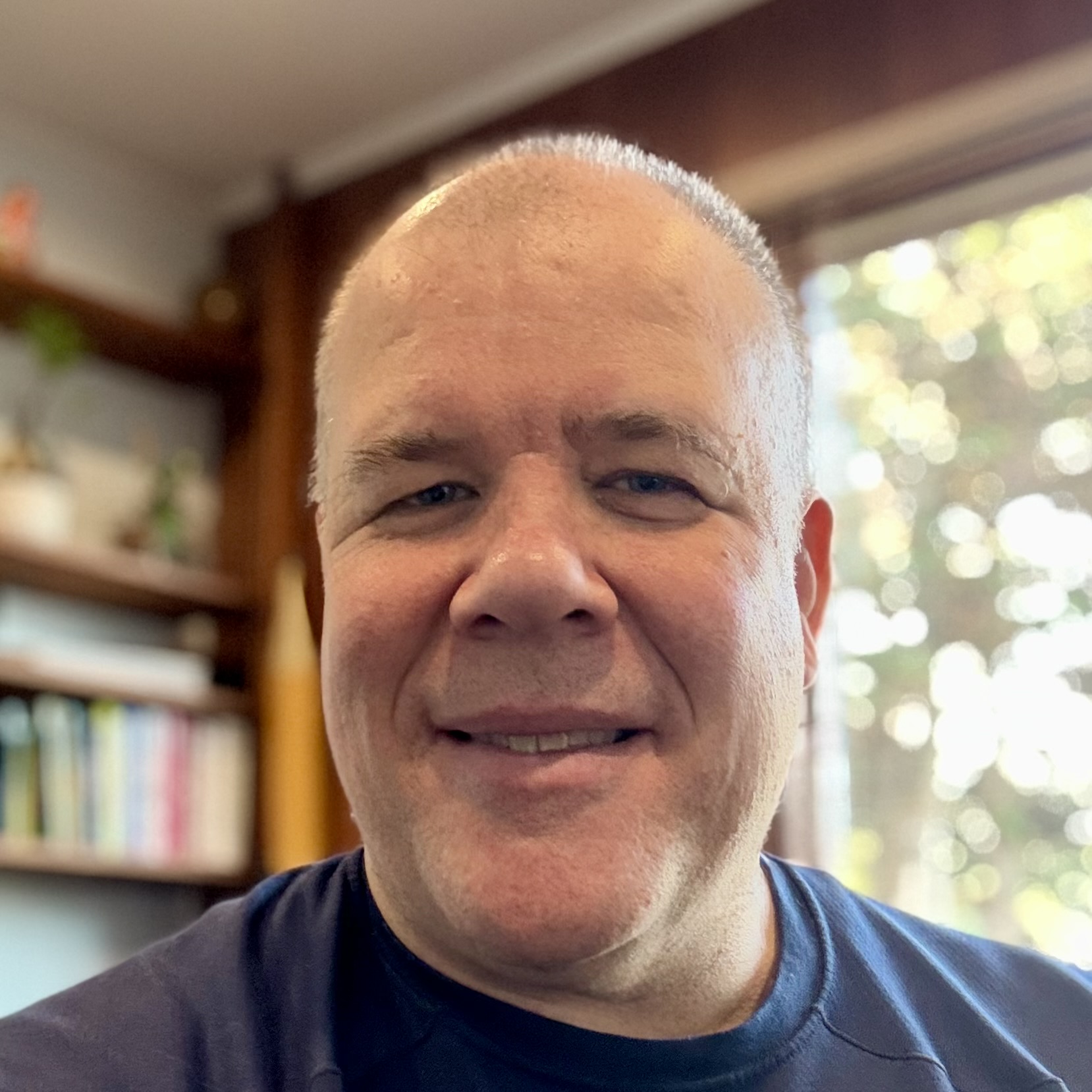
Mike Gold Makes The Case For Big Swings That Lead To Practical Good
Mike Gold has built a life defined by range. He ran an art gallery in New York. He scaled an animation studio to nearly 200 artists. He has built backend systems for massively multiplayer online games, collaborated with DARPA on next-generation engineering tools, and even mined gold on a beach in Nome, Alaska.
Mike traces the throughline that unites these pursuits: he loves learning, assembling strong teams, and building systems that improve the human experience. Today that compass points to two long-term missions: helping more children learn to read earlier, and reducing serious sports injuries through a short weekly training regimen that is proven to deliver outsized results.
Highlights include:
Mining gold in Nome and what it taught him about persistence and problem-solving
Why early reading is one of the most studied areas of learning yet still lagging in successful outcomes
An introduction to RIIP REPS, a 35 to 40 minute weekly program designed to reduce injuries and improve performance especially for teenage athletes
The Amherst classmate he nominates for a future episode
You can email Mike at HancockGold@gmail.com. Thanks to Jordan Hayslip for nominating him.
Asim Ahmed Reflects On Caregiving, Infectious Disease Sleuthing, And The Soundtrack Of His Life
Asim Ahmed has three passions: the detection and workings of infectious diseases, sports (especially his hometown St. Louis teams), and music, and in this wide-ranging conversation, he shows how each one has shaped his life.
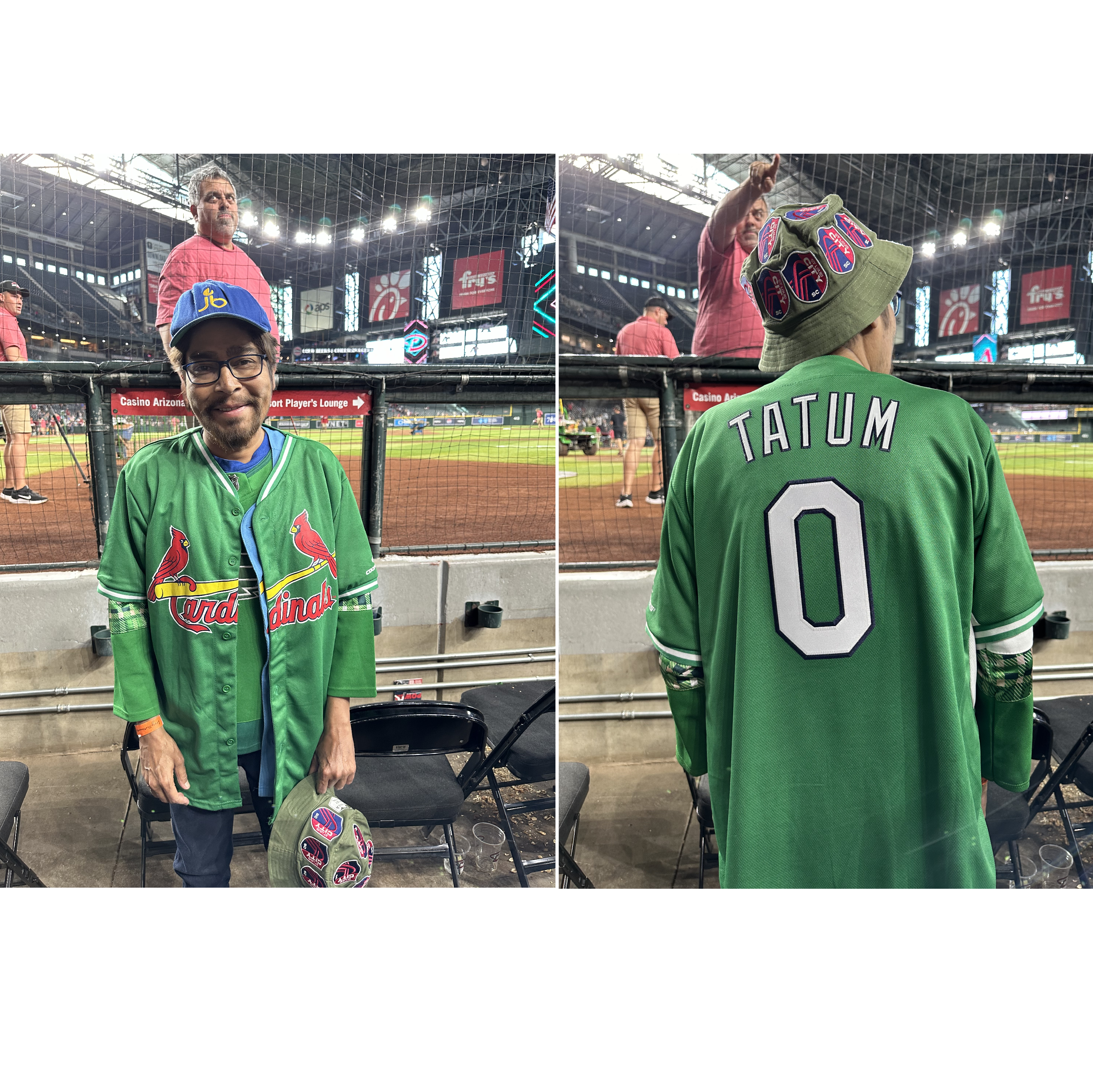
We talk about his one-of-a-kind custom jerseys (clever mashups of teams, players, and music references), his journey from pediatric infectious disease (ID) in academic medicine to metagenomic diagnostics in biotech, and the “detective work” mindset that drew him to ID in the first place.
We also close with something deeply personal: Asim reflects on the reality of caring for aging parents, including how complex the system can be, and why he’s willing to help others who find themselves learning it on the fly.
Highlights include:
The art (and satire) of his custom sports jerseys
Why he was drawn to infectious disease
The promise of “liquid biopsy”–style diagnostics for infections
The live shows and venues that he’ll never forget
The Amherst classmate he wants me to interview next
For those not familiar with “Seven Nations Army” by the White Stripes, you can listen to it here. https://www.youtube.com/watch?v=0J2QdDbelmY.
You can email Asim at atothe3@gmail.com. Big thanks to JC Leveque for nominating him.
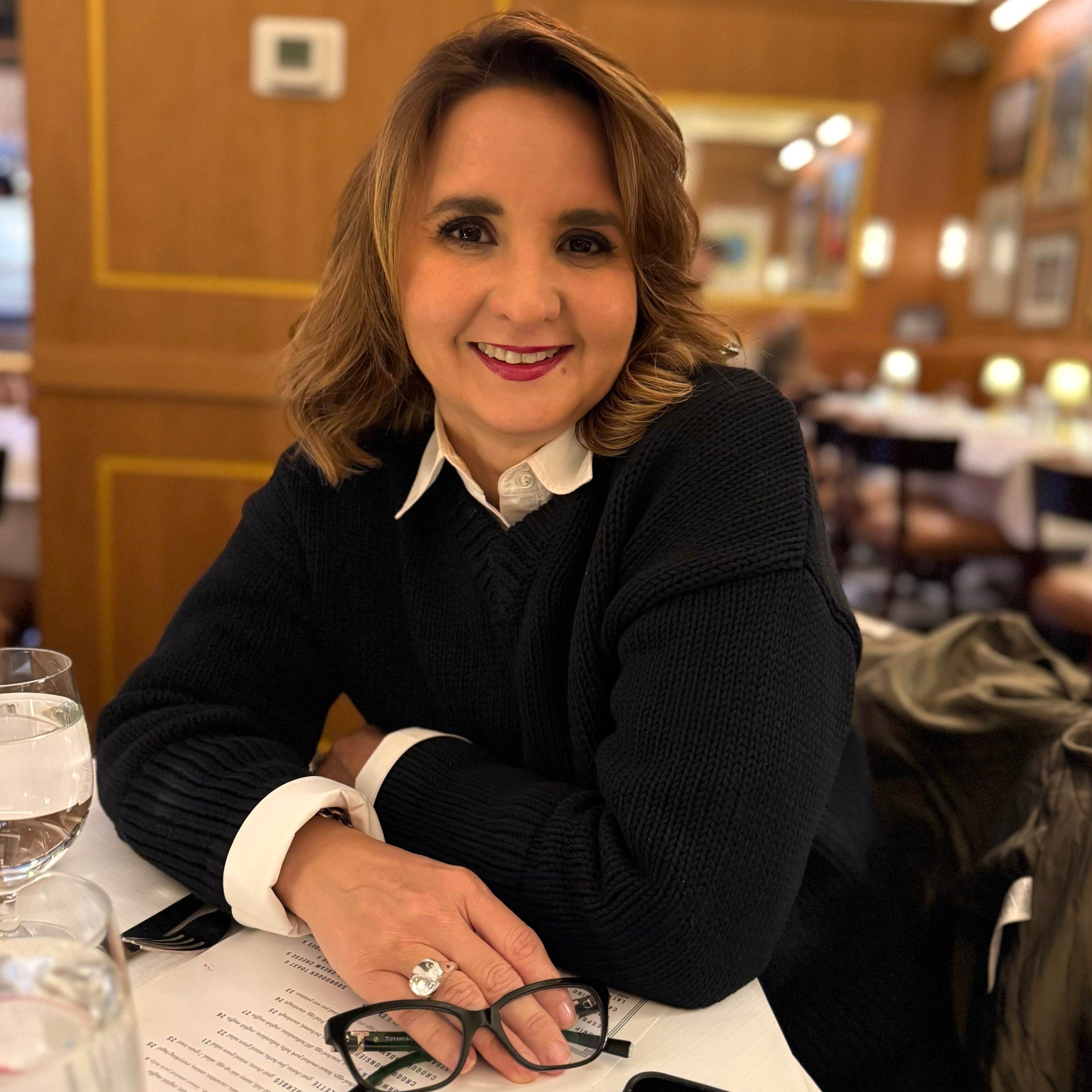
Mariela Rexach Learned To Stop Following The Script
Mariela Rexach’s life reflects a combination of steadiness, self-knowledge, and humble assertiveness. From Amherst to Penn Law and back home to Puerto Rico, Mariela has raised a family and built a nearly three-decade career at the same women-owned labor and employment law firm. She shares the thinking that has helped her make decisions that align with her values rather than conventional expectations.
Mariela reflects on the mentorship of a federal judge she credits with giving her more than any advanced degree ever could. She talks candidly about how fear fuels her courtroom preparation, the recurring discomfort that comes with new challenges, and how she has learned to recognize those feelings as signals that she’s exactly where she needs to be.
Listen carefully and you’ll take away so much wisdom, including what it looks like to advocate for yourself, how to shape your work around your life, how to ask for what you need, and the importance of leading with empathy.
Highlights
Why “getting comfortable being uncomfortable” has been one of Mariela’s most valuable skills acquired at Amherst
How fear and self-doubt can be harnessed as tools for preparation and excellence
Why there’s no single template for success, and why playing to your strengths is so much more important than playing to expectations
The importance of asking for what you need and modeling humane leadership for the next generation
Three new classmates she’d like to hear me interview next
To get in touch with her, find her on Facebook, Instagram, or LinkedIn. Big thanks to Alisa Pincus for nominating Mariela!
 Matt Collins' Blog