
“Facebook, Twitter and Instagram massively over-rated by marketers, says Prof Mark Ritson.”
So wrote The Syndey Morning Herald last week. Aside from the fact that source material for this “news” is in fact over four months old, the headline writer managed to distill a nuanced and critical message all marketers need to hear into a sound byte that, predictably, has earned Professor Ritson all sorts of noisy ridicule.
Here’s a sampling:
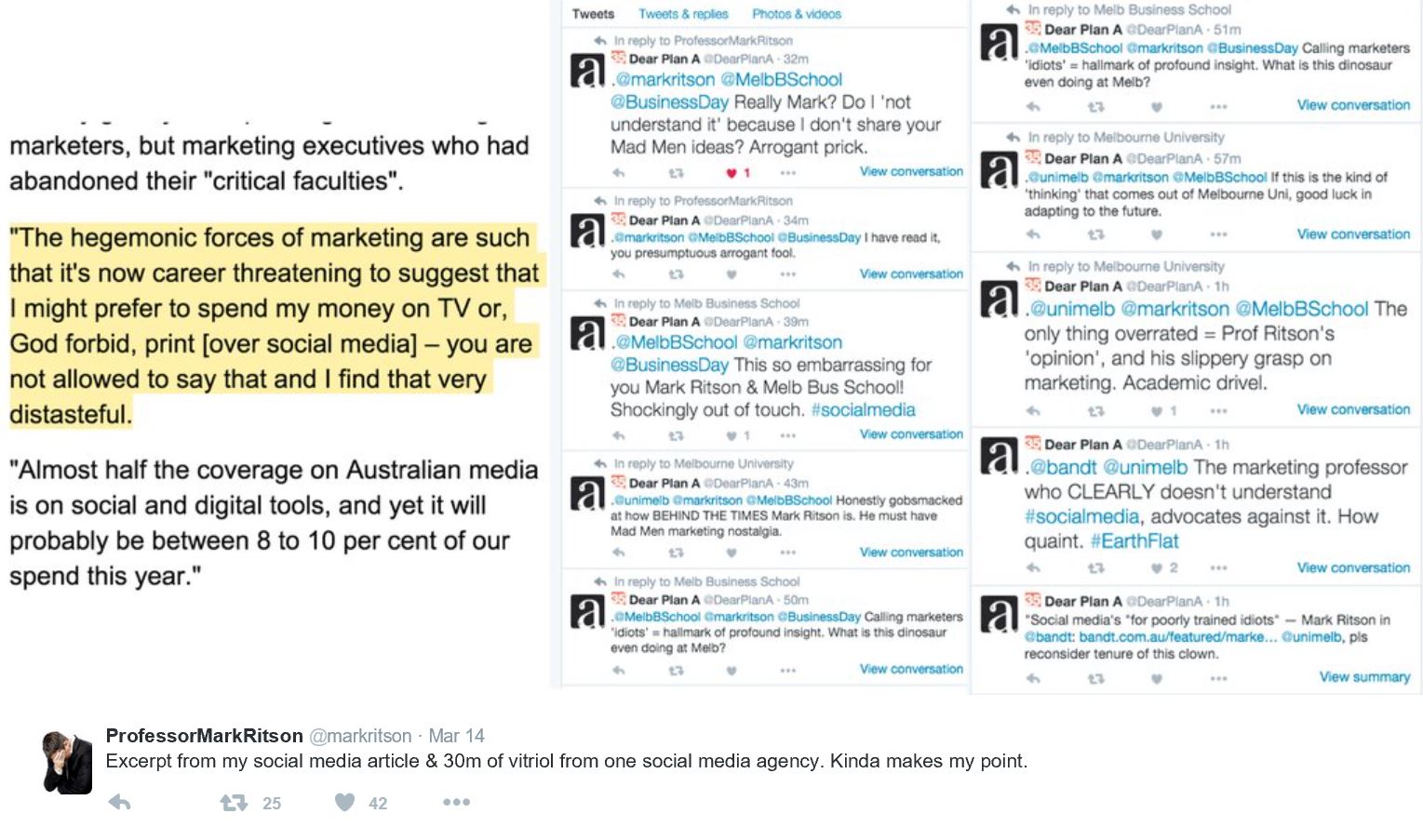
If you’re a marketer, do yourself a favor. Watch the full length of Ritson’s talk with an open mind. Remind yourself that to get on the agenda at an event such as this one, the speaker must have a provocative theme. Ritson didn’t disappoint. His title: “Why Social Media is Over-Rated, Digital Media is Outdated, & Integration is the big word for 2016.” If you watch, you’ll find a healthy challenge to assumptions you might hold.
If you don’t have the time, here’s a summary:
-
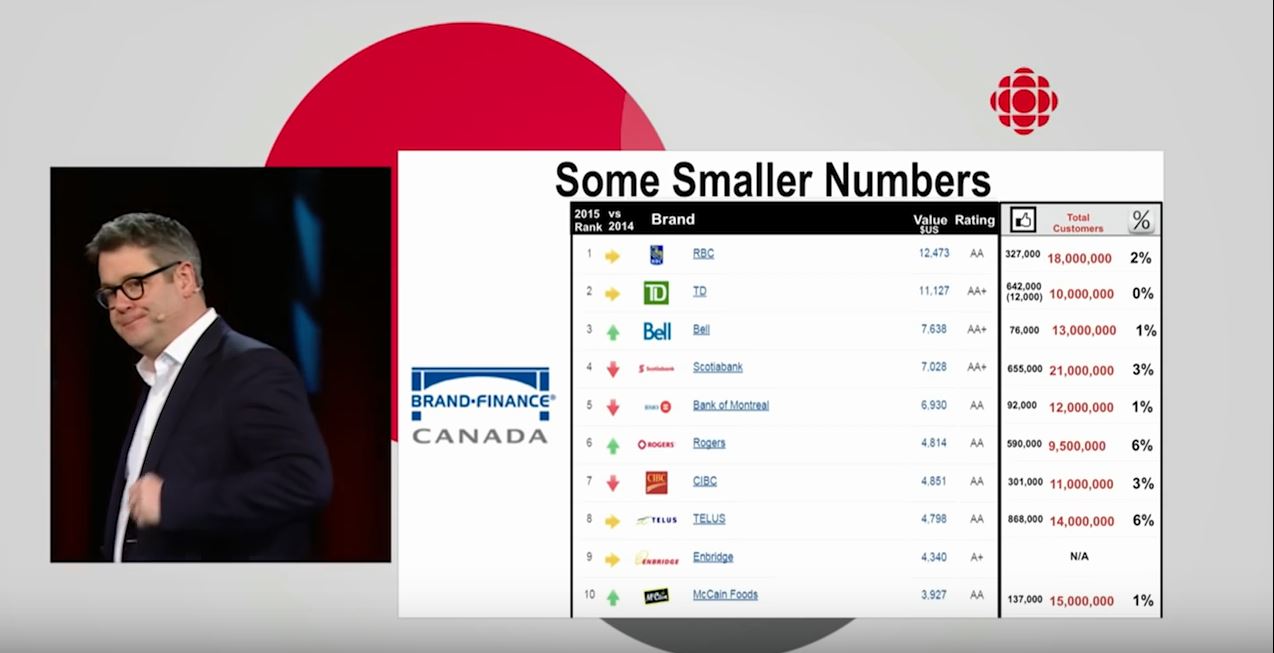
In general, people do not wish to connect to brands on social media in the way they connect with other people.
-
That is why for all of their reach, social media platforms have not resulted in brands generating massive communities, relative to their customer base, as this slide demonstrates. (Anyone following Facebook knows that it has made organic reach for brands’ updates harder to achieve without advertising, so we shouldn’t be surprised by these numbers.)
-
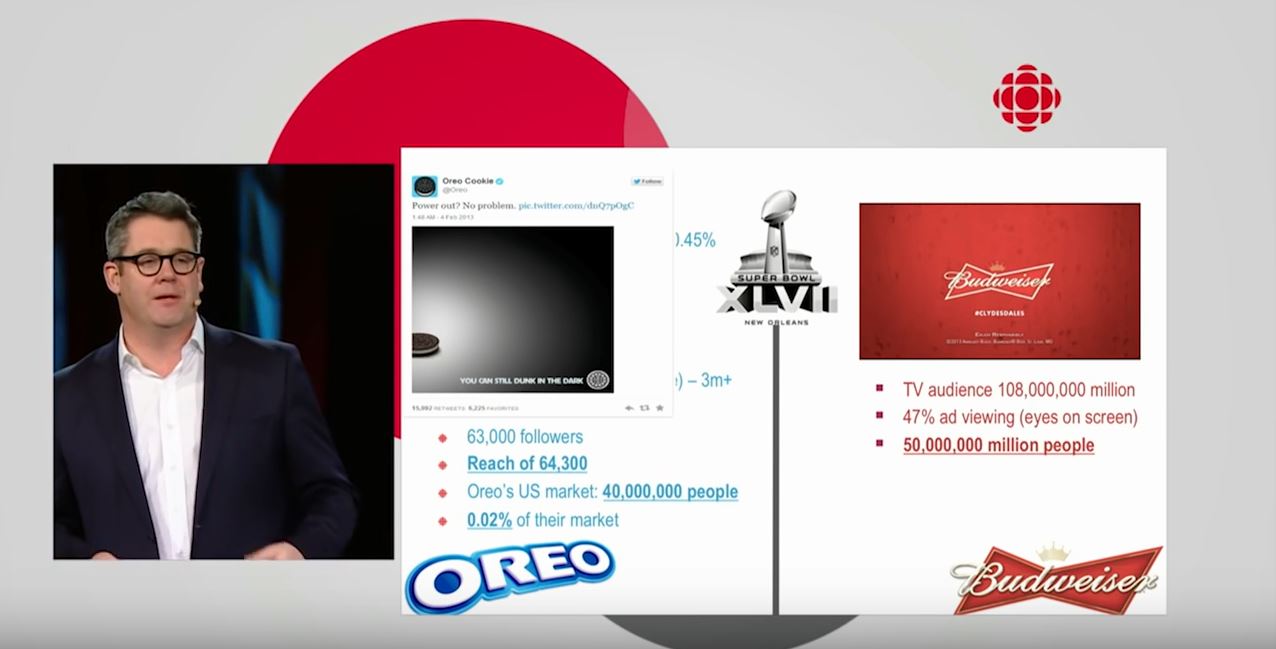
He even takes on arguably the most famous Tweet of all time, Oreo’s “lights out” post during Super Bowl XLVII, and shows that for all its hype, it was exposed to a very small number of people. To prove the point, he compared its reach to one of Budweiser’s TV ads from the game. The results aren’t even close.
-
If the most heralded branded social media post of all time can reach only 63,000 of its customers, Ritson challenges marketers to not over-invest in anything just because it’s the latest shiny object.
-
His prescription, which you’ll find around the 42 minute mark, is hard to refute if you’ve thought it through:
-
Many in the marketing media love to exaggerate the value of the latest marketing trend. My hypothesis: they know that these stories strike fear in the hearts of their readers. They fear that they are at risk of obsolescence. If they work for agencies, they fear their clients will ask them for a point-of-view on whatever the new thing is, and they are afraid to say, “We don’t know what to make of it.” They fear being at an event and watching some other marketer or agency take the podium to reveal something amazing they claim to have done with the new shiny object. Fear is a powerful motivator that makes headlines hard to resist and therefore drives up readership.
-
Ignore this media, or at least read it with a grain of salt.
-
Do not proclaim “the death of [media XYZ],” e.g. TV and radio. Chances are, it’s demise is greatly exaggerated. Rely instead on the data to tell you what media your target audience consumes.
-
Eliminate distinctions that have defined marketing roles, e.g. digital marketing, PR, direct marketing, promotional marketing, mobile marketing and social media marketing. It’s just marketing. Consider every tool and how they integrate together to achieve your goals.
-
Zero base your marketing budget. Every budgeting cycle, rebuild that budget based on what you are trying to achieve (as opposed to starting with last cycle’s budget and revising up or down). This will force you to revisit your assumptions and goals and not just let last year’s playbook dictate this year’s strategy.
-






 Matt Collins' Blog
Leave a reply to Matt Collins Cancel reply