
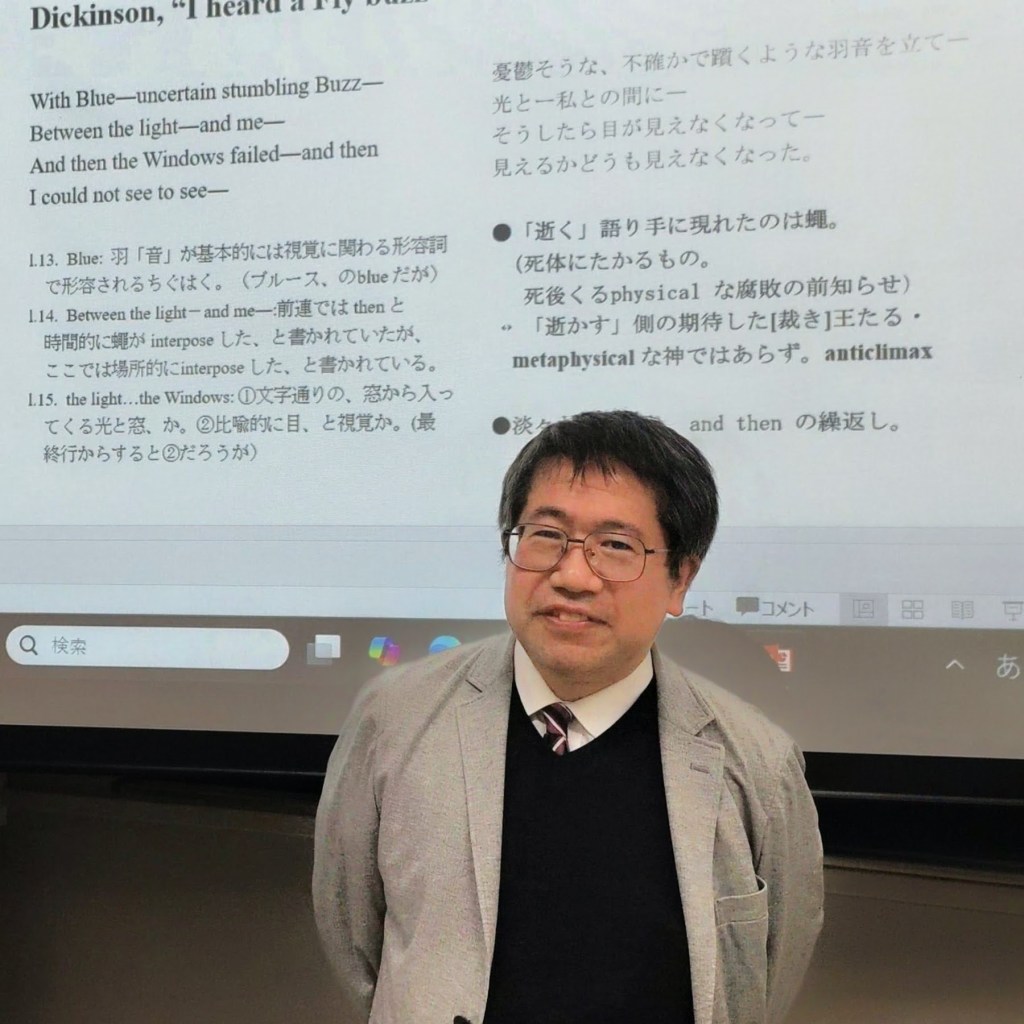
Kensei Nishikawa arrived at Amherst as a transfer student from Japan already holding a degree from the University of Tokyo, carrying with him two languages, two cultures, and a deep love of literature. What he didn’t yet know was how profoundly Amherst would shape not just how he reads and writes, but how he listens.
We explore Kensei’s lifelong devotion to the humanities, especially poetry, and the role they have played in his life as both a student and a teacher. Now a professor of English and poetry in Japan, Kensei has spent decades moving between languages and academic traditions, translating words, structures, and ways of thinking. He shares why he believes the humanities remain essential for cultivating empathy, moral imagination, and the ability to hear one another.
Kensei also speaks candidly about aging, memory, and the work of maintaining one’s intellectual vitality over time. Rather than chasing novelty, he is focused on preserving the richness of language and thought.
Highlights include:
- What it meant to arrive at Amherst as an international transfer student in 1992, and how that moment shaped his understanding of America.
- How Amherst taught him to listen in the classroom, across differences, and in a second language.
- The challenges and rewards of teaching poetry and literature across Japanese and American academic traditions.
- Why the humanities matter now more than ever, and how they help us live more human lives.
- The classmate he hopes to hear from next.
To get in touch, you can email Kensei at kenseini@inst.kobe-cufs.ac.jp. Many thanks to Brian Clark for nominating Kensei.
 Matt Collins' Blog
Leave a comment