fb-vs-google-after-18-quarters

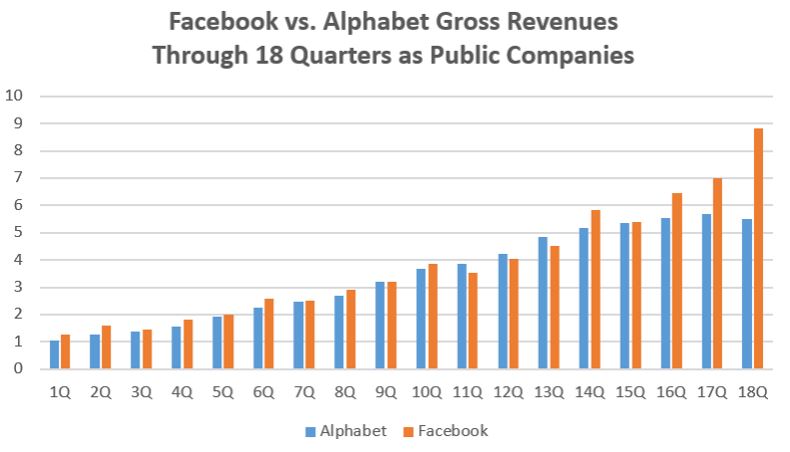
After comparing growth at the two biggest digital advertising platforms in the world at the same stages since their IPOs, it’s clear that Facebook has pulled away from Google.

Whether Facebook can keep it up is subject to a lot of debate. Though the company faces significant barriers to growth, including a big one that is self-imposed, I think Facebook has what it takes to continue its pace.

The reason why many question Facebook’s ability to sustain the heady growth rates visible in this chart emerged in the company’s Q3 2016 analyst call. Here’s an article that summarizes it well. In short, the company’s CFO cautioned investors that the company would not increase ad load in 2017.

Ad load describes the concentration of ads relative to organic content, such as the photos and other updates users share with their friends. Facebook wants its users to value all the content in their feeds equally, whether it’s advertising or organic. This philosophy affects Facebook’s ad pricing that plays out in the company’s auction-based advertising marketplace. By refusing to increase the percentage of ads that Facebook provides, it has acknowledged that it has reached the limit of what its customers will tolerate. Serve more ads, and Facebook believes consumers will start to devalue the ads they see.

Going beyond this tipping point has the potential be more damaging to Facebook’s ad business than halting ad load growth. Holding advertisers and itself accountable for serving ads that engage and don’t drown out what our friends share will preserve the symbiotic foundation that has powered Facebook’s growth to this point.

With increasing ad load off the table, Facebook has two other growth levers it can pull. First, it can increase the number of users on the platform. That seems like a tall order given that it already serves nearly 2 billion people. Increasing this by 10 percent would require adding an audience larger than Pinterest.

The second and more promising lever would require increasing the amount of time we spend on Facebook, and this is where there’s plenty of room for growth. Dr. Richard Windsor, the author of the must-read Radio Free Mobile blog, explains why through a concept he calls Digital Life.

Digital Life, he argues, combines all the core things customers expect to do digitally. Think messaging, social, video, games, work, shopping, maps and apps. If you assess all digital properties through the Digital Life lens, you can see why Google, Facebook, Apple, Amazon, and Microsoft are thriving while Twitter is struggling.

If Facebook can give us a reason to make the social platform a hub for gaming and encourage even more video creation and consumption, for example, it will give its users more reasons to stay on the platform. The more consumers use Facebook, the more advertising inventory it creates, which would mean more revenue even while holding ad load steady and in an environment of slower new user growth.

With that in mind, look for Facebook to make more investments in gaming, marketplaces and video in 2017. They may not pay off immediately, but over the long run they can help keep Facebook on an aggressive growth path.

Podcast also available on PocketCasts, SoundCloud, Spotify, Google Podcasts, Apple Podcasts, and RSS.

Leave a comment

This site uses Akismet to reduce spam. Learn how your comment data is processed.

The Podcast

Join Matt Collins as he interviews his Amherst College classmates. Every episode reveals what each guest has been up to since we last collided on campus, college memories that are loaded with 1990s nostalgia, the impact our liberal arts educations have had on our lives, and how we’re thinking about the future.

About the podcast